


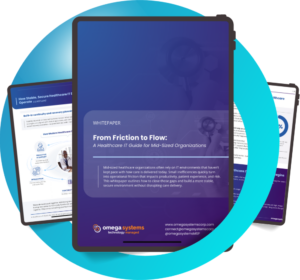
 Mid-sized healthcare organizations are operating in a far more connected environment than they were just a few years ago. Providers move between locations and devices, cloud platforms support daily operations, and clinical, operational, and billing systems are deeply interconnected.
Many IT environments, however, haven’t kept pace. The result is operational friction that affects productivity, patient experience, security, and compliance – from slower EMR performance and disconnected workflows to limited visibility and growing cybersecurity exposure.
At the same time, healthcare teams are being asked to do more with systems that don’t always work together cleanly. Small inefficiencies compound quickly – slower documentation, inconsistent access, disconnected platforms, and growing security exposure across increasingly complex environments.
This guide provides a practical framework for evaluating how healthcare IT environments support performance, security, and long-term resilience, including:
For physician-led practices, ambulatory care organizations, and multi-site provider groups, this isn’t about adding more technology for the sake of it. It’s about creating an environment that supports how care is actually delivered – reducing friction, strengthening visibility, and improving stability across the organization.
Access a practical framework to identify operational gaps, reduce risk, and build a more stable, secure healthcare IT environment that supports both clinical and business outcomes.